
|
|
|
MEE has conducted
focus groups in some of the hardest-hit neighborhoods in America
– from the South Side of Chicago to South Central LA, from North
Philadelphia to Southeast DC, in post-Katrina Louisiana and many
more. When we talk to people living in these communities, two factors
constantly come up – stress and trauma (often preceded by violence). Trying
to make do with less, feeling that America has no seat left for
you at the table, dealing with poverty and confronting all of the
various “-isms” in our society – all of them converge together
to render poor Black people angrier, more hopeless, and more depressed.
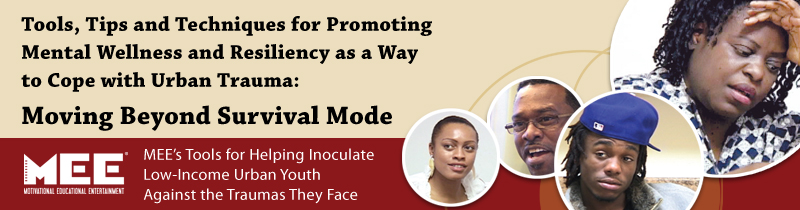
For the past two years, MEE has been conducting new focus group research with low-income, young African American adults and parents in four American cities, talking with more people impacted by ongoing stress and trauma in underserved communities. In addition to holding 14 focus groups with African American families (young adults ages 19-22 and mothers of adolescent males), we talked to top experts in the field of mental health. Based on our findings, it became clear to us that culturally relevant materials are critically needed, more than ever, in order to begin a community-wide dialogue with African American young adults and parents about the importance of mental wellness—and how to achieve it. In response, we created the prototype for a Community Mental Wellness Toolkit. The Toolkit, which comes in a basic, online version, and an enhanced Toolkit package, brings the most effective communication strategies uncovered in MEE's audience research to life in ways that are immediately applicable in a number of community settings. Our research and experiences have shown that mental and emotional issues contribute to behaviors that impact many educational, social and public health issues. For example, Community Network members have encountered scenarios such as:
Issues like these make both versions of our
Toolkit extremely relevant even for those who are not direct mental
wellness service providers or professionals. It will help overcome
the significant level of community stigma associated with even
talking about mental health issues. It includes important
information about how to support young people and adults who have
experienced ongoing stress and trauma in their lives, by strengthening
their coping skills. MEE is excited to announce that the online version Community Mental Wellness Toolkit will be made available in late January for members of MEE's Community Network to read and download at no cost. We are confident that you will find the online Toolkit both enlightening and useful. Others interested in more details about promoting mental wellness in the African American community will also be able to purchase the full (expanded) Toolkit package through MEE’s new Mental Wellness Website. The Community Mental Wellness Toolkit also includes "authentic," audience-tested mental wellness promotion messages and intervention strategies. With the kit, a cross-section of providers will get a better understanding of the worldview of youth and families who require mental health support, and can be prepared to more effectively receive and interact with them in a culturally-relevant manner. Those who may benefit from the Toolkit include:
|
|
©2009 MEE Productions Inc.