The proposed Plan, including MEE’s findings and analysis of the collected data, was presented then submitted to AC-DHS Leadership in February 2023. In May, MEE received approval from AC-DHS to implement an expanded version of the original Plan, which now promotes not just PCR, but the broader array of drug and alcohol recovery and treatment providers in the County. Although the Plan incorporates traditional and digital media among its components, it values and prioritizes community engagement as a key channel for the County’s efforts to promote its treatment and recovery services.
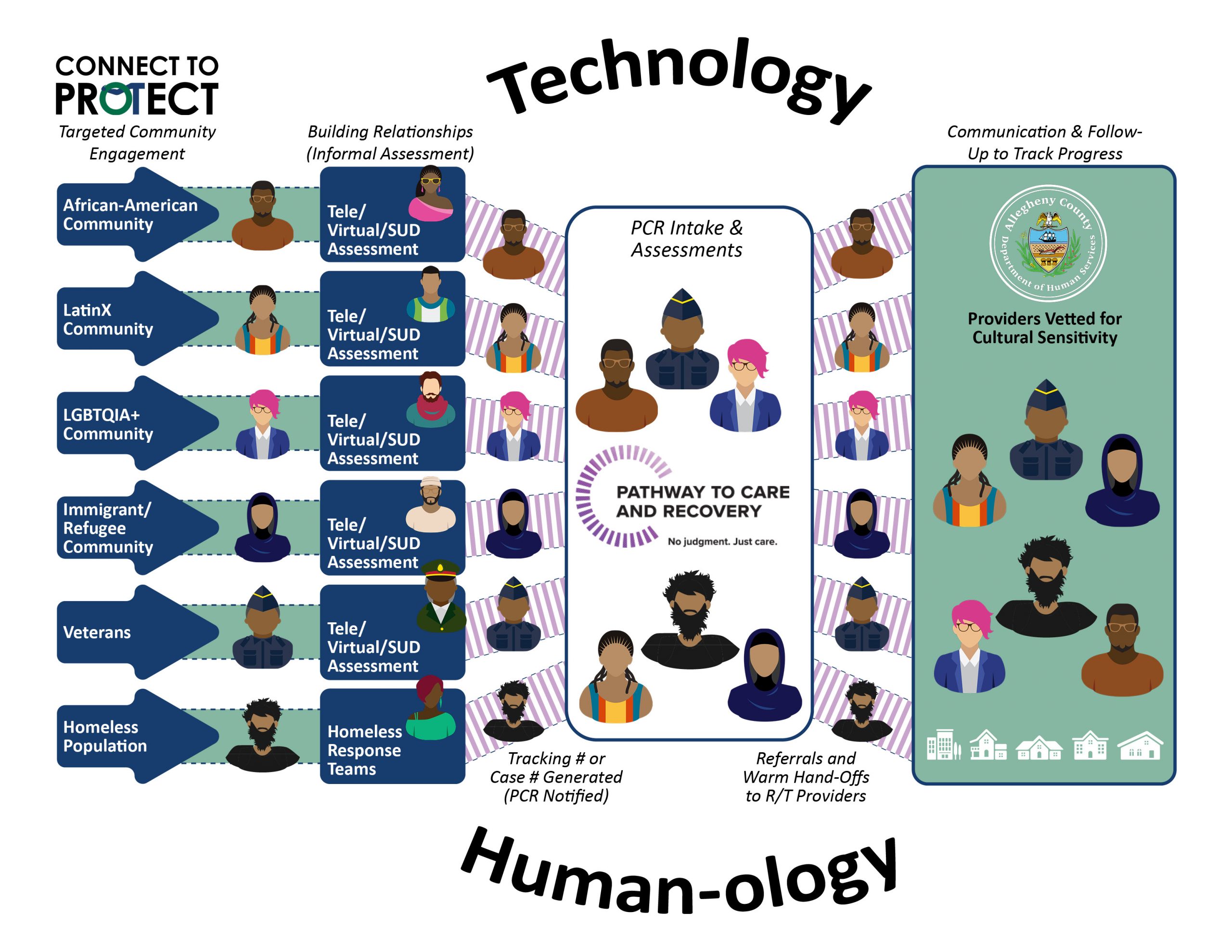
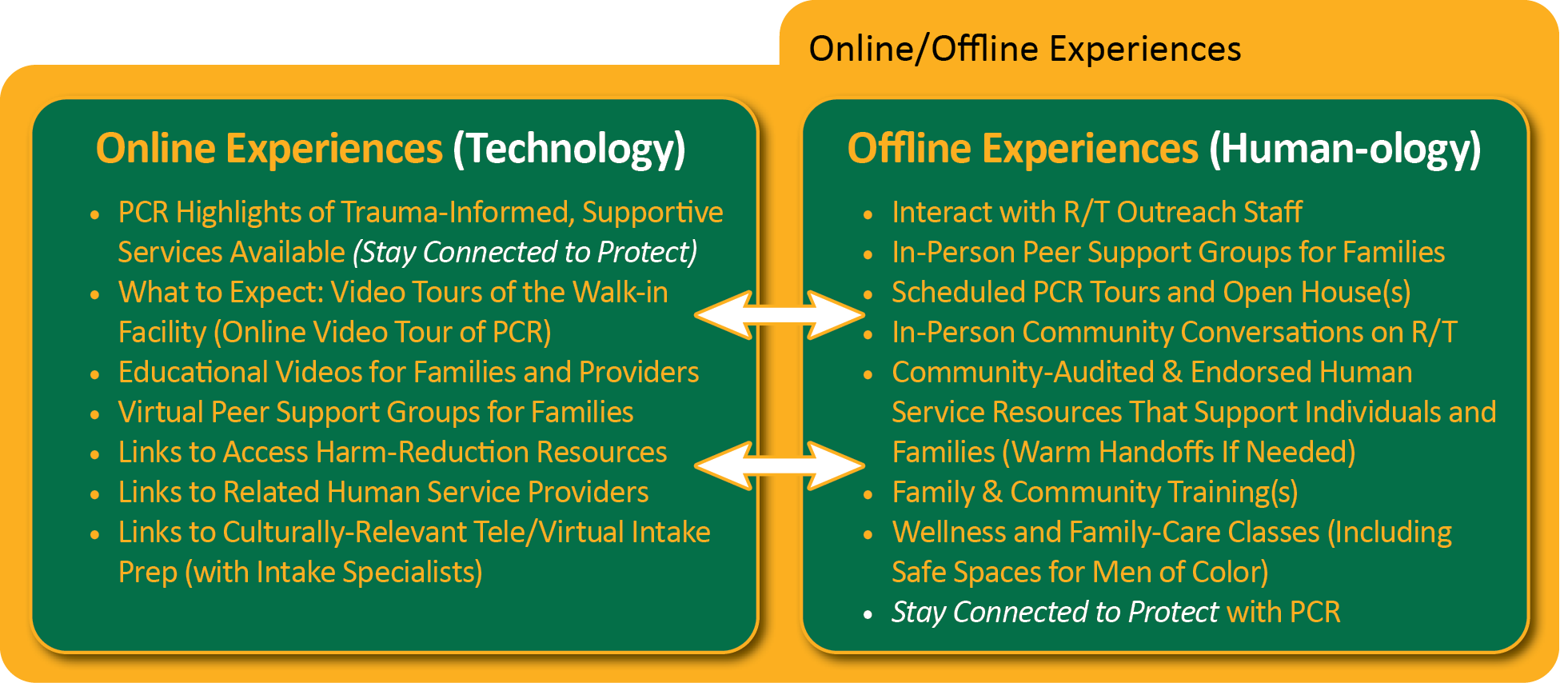
MEE has created a comprehensive framework for a public-facing awareness and engagement campaign that will be launched in late 2023. It will meld the latest digital media/technology (for scale) with the power of grassroots offline (in-person) and community-based “human-ology” (for impact and true behavior change). Together, these online and offline engagements will increase community awareness and create positive word-of-mouth among the most-in-need sub-populations about the benefits of the range of recovery and treatment services offered in the County. MEE is also developing strategies (including warm handoffs from trusted messengers) to support these residents in effectively “navigating the system” to get to the culturally sensitive and competent services they need.
Campaign Highlights
“Connect to Protect” Campaign Components
The overarching goal of the upcoming campaign is to explain and brand Allegheny County’s entire SUD treatment/recovery eco-system, beyond a focus on Pathways to Care and Recovery as the “front door” for entry:
- The campaign will drive marginalized/underserved residents experiencing the highest disparities/inequities (primary target audience) to find out about the details of available (vetted) treatment/recovery services via a Community Engagement Campaign that includes a hotline, campaign website, YouTube videos, social media platforms and ads, transit advertising, (streaming) radio ads, trained community outreach teams and dialogue with Certified Peer Recovery Specialists.
- The primary target audience will be family (original or chosen), friends and partners of individuals with SUD. The rationale is that these are the people who are in close relationship with County residents who may at some point both need and be ready for drug and alcohol recovery and treatment services. Through these existing relationships, they are present, they care and they are regularly interacting with or monitoring the person misusing substances. They can be both influencers and supporters along the journey of treatment and recovery. At the moment of readiness, they can have information about available recovery and treatment programs in their “back pocket” and assist with the navigation process to access those services.
- Messaging will reflect a protective-factors, strength-based approach, i.e., “You Have Strengths; We All Need Supports. Connect to Protect.”
- The framework/infrastructure will be built on an internal campaign that fosters more compassion, commitment and collaboration across the County’s funded treatment/recovery service providers.
- Real community engagement will be the centerpiece, both to take information (via focus group research and a Community Advisory Board representing residents experiencing existing disparities/inequities in access) OUT and to put information/education IN to underserved and vulnerable populations (using “human-ology” strategies and tactics).
- Trusted community messengers and outreach teams will be leveraged to engage the hardest-to-reach residents; they will be trained by MEE and have ongoing engagement support from MEE (via technical assistance supported by private WhatsApp and Facebook groups).

Campaign Components Blend Technology and Human-ology
The upcoming awareness and engagement campaign will value and prioritize community engagement in its promotion of recovery and treatment services in the County. The campaign plan provides the framework for a cost-effective awareness and engagement campaign that melds the latest digital technology (for scale) with the power of grassroots offline (in-person) and community-based “human-ology” (for impact and true behavior change). The campaign is actually more culturally-relevant and will prove to be more cost-effective than the mainstream, traditional media (leveraging brochures and websites) that most human-service agencies tend to use. A combination of online and offline engagements will be used to share critically important information about the range of recovery and treatment services offered in the County.
The scale provided through digital/online experiences (websites, social media platforms) and traditional media will be used to formally introduce the campaign to the primary audience and at the broadest levels of the community. Since we will be able to reach thousands of residents all across the County, these digital media will begin to create awareness and set up the grassroots outreach, communications and community engagement to immediately follow.
In order to effectively reach and serve the most vulnerable, the County (via this campaign) will be able to improve its efforts to go out into the community and “meet them where they are.” Our goal for the campaign is to involve all communities disproportionately impacted by SUD, regardless of native language, race/ethnicity, or socioeconomic status, rather than relying on a one-size-fits-all approach. The upcoming campaign also supports reflecting the language, style and day-to-day realities of various populations.
What’s Next – Near Term Campaign Implementation Steps
The activities below will inform initial campaign development, which will happen over late summer and early fall months. All potential campaign branding, materials and messages will be pre tested with the target audience prior to final development and implementation.
Listening/Collaboration Sessions with Key Providers
MEE understands that collaboration is critical to our collective success in reducing health and social disparities among the County’s residents. As the foundation for creating campaign messages and materials that speak to communities historically ignored or mistreated (and who are experiencing ongoing stress and trauma), along with building the on-the ground partnerships that will enable us to start overcoming long-standing mistrust, MEE is convening a series of listening/collaboration sessions. During August through October, MEE will meet with key partners identified by AC-DHS Assistant Deputy Director Maisha Howze and her team at the Bureau of Drug and Alcohol Services as providers that serve the campaign’s primary target audience.
These listening/collaboration sessions will help MEE better understand:
- the realities of the “supply-side” of recovery/treatment services in the County to provide culturally-competent services necessary to actually reduce inequities in treatment; and
- the willingness of those working locally to collaborate around reducing the inequities in who gains access to programs and services addressing substance-use disorders.
At the end of this process, the goal is to have a clear view of how willing those working locally are to collaborate around reducing the inequities, including embracing warm handoffs from trusted messengers and other strategies to support the most-at-risk residents in effectively “navigating the system” to get to the culturally sensitive services they need.
Recruiting and Convening a Community Advisory Board
To gain additional insights into community-level realities, MEE will re-convene a Community Advisory Board that will be actively engaged in providing feedback during the upcoming campaign. The CAB will be an inclusive group of grassroots community leaders who work with and represent the County’s traditionally underserved sub-populations, including lower-income African Americans and the Latinx and the LGBTQ+ communities; other trusted community stakeholders; members of existing drug-and-alcohol work groups/coalitions familiar with the County’s recovery/treatment operations; and health department professionals who work in the SUD prevention space.
As we approach campaign rollout and implementation, MEE will extend an invitation to participate on the “Implementation/Evaluation CAB.” The initial meeting will describe the inequities the campaign is trying to address and how CAB members can ensure accountability in meeting those objectives.