|
|
Moving Beyond Survival Mode
Sample Downloads |
|
 |
|
Executive Summary
Click Here to download. |
|
 |
|
How To Use This Toolkit
Click Here to download. |
|
 |
|
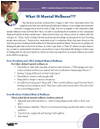
What Is Mental Wellness
Click Here to download. |
|
|
|
 |
|
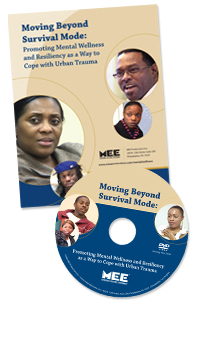
Moving Beyond Survival Mode
Documentary and Research Report
|
 | | $74.95
(includes the DVD and Report) |
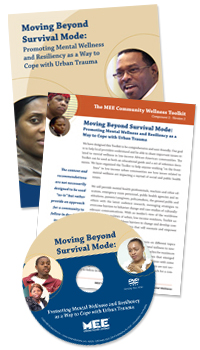
MEE’s latest documentary, Moving Beyond Survival Mode: Promoting Mental Wellness and Resiliency as a Way to Cope with Urban Trauma, explores how living in low-income, underserved communities puts individuals at risk for stress, ongoing trauma, depression and even mental health problems. This video showcases the voices of Americans who too often fall through the cracks. Young Black Americans who feel beaten down by the struggle to survive poverty, broken homes, child abuse, violent communities, poor schools, institutional racism, police harassment and other social ills-share their stories and their emotional “injuries.”
Based on a national research project on the state of mind and mental health of low-income African Americans, this 45-minute documentary focuses on the stresses and challenges African American families living in poor and at-risk communities face daily, along with the huge and growing need for stronger mental wellness support systems.
The documentary focuses on a range of issues, including interpersonal relationships, the ability to focus in school or at work and life choices. Women and men who live in Philadelphia, Washington DC, Chicago and the Oakland area tell the story of what it’s like living in survival mode, when their neighborhoods are overrun by violence, poverty and drugs.
Moving Beyond Survival Mode searches for insights that help identify the causes for generational cycles of family dysfunction, feelings of abandonment and anger at an oppressive “system” that lead people to behaviors that have negative consequences-at both the individual and community level. The documentary also explores the barriers poor families face while trying to navigate the current mental healthcare system.
By providing a voice to those who are too often overlooked, the report and documentary present a thoughtful and enlightening discussion of what helps young people thrive, instead of merely survive. It raises new awareness of the issues related to ongoing stress and trauma and will begin to change the way people think about mental wellness. Most of all, MEE hopes to compel readers and viewers to do something—to get help, to help somebody, to reach out—in their own communities. |
|
|
 |
|
|
|
|